Mike Quille explores the relations between art, politics and empire, in the current Artist and Empire exhibition at Tate Britain.
Has there ever been a more successful engine of global exploitation than the British Empire? And has any other empire been better at reframing that exploitation as benevolent paternalism, moral improvement and the general all-round civilisation of savages?
At its height the British Empire was the largest in history, covering almost a quarter of the world’s total land area. It has shrank over the last hundred years to a handful of overseas territories, but its legacy is everywhere. It is most obvious in the statues and monuments all over the country to cruel, thuggish and racist monarchs, admirals, generals, politicians and imperial administrators. They dominate and disfigure our public spaces: hence the campaign to remove the statue of Cecil Rhodes in Oxford.
Other legacies of Empire lie in social structures, in the fault lines of contemporary global politics particularly in the Middle East, and in art and culture generally. One of the sad and sobering aspects of this exhibition is the way it reveals how the ruling classes have since the early colonial period co-opted most art and most artists, most of the time. Commissioned by the rich and powerful, artists have themselves been colonised, paid to promote, legitimise, and even glorify Britain’s violent and rapacious foreign conquests.
Six rooms at Tate Britain tell the story through art of colonial conquest, collaboration, subordination and resistance. Various items of visual and material culture eg paintings, flags, sculptures, clothing and maps, are used to illustrate various themes.
In the first room, Mapping and Marking, we see how British cartographers and surveyors mapped occupied territory, erased indigenous ownership, imposed new names and new borders, and presented domination as civilisation.
The next room, Trophies of Empire, focuses on the various objects, specimens and other examples of material culture brought back by explorers, sailors, missionaries and traders. It shows how the looting, bartering and purchasing which accompanied the imperial project penetrated museums, elite collections, laboratories and zoos.
Next, Imperial Heroics explores the explicitly ideological mission of most British history painting, which helped shape popular perceptions of the Empire. They include representations of heroic struggle and martyrdom by tiny bands of brave British soldiers, surrounded by crowds of savages. Some of the representations of nineteenth century jihadists resisting Empire are unnervingly topical, and seem prophetic in the light of the current Islamophobia in the media. Just how much has actually changed in the way our mainstream culture views people with other religions and darker skins?
The room on Power Dressing is a fascinating insight into how the Western elite tradition of grand portraiture, developed to convey the power and dominance of representatives of the ruling classes, arrived in colonies along with the gunboats, machine guns and deceitful diplomacy. British diplomats and administrators were often portrayed wearing indigenous clothing such as Native American costume. Colonised peoples, whilst often forced to adopt Western styles of clothing, often modified and resisted it, or knowingly played to imperial expectations by wearing their own. Trans-cultural cross-dressing expressed the tensions and conflicts between homeland, colony, and imperial centre, in striking and sometimes humorous ways.
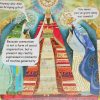
Face to Face contains some fine examples of portraits of Empire’s subjects. Both Charles Frederick Goldie and Rudolf Swoboda paint colonial subjects sympathetically, giving dignity and identity back to them, and revealing elements of doubt, even guilt, about imperial conquest. Swoboda’s ‘Bakshiram’ (reproduced above courtesy of Tate Britain) is one of the finest paintings in the exhibition.
And finally, in the artworks in the Out of Empire room (and occasionally pointedly positioned in the other rooms) we see how post-colonial and contemporary artists developed some effective artistic practices which challenged, ironicised and thoroughly demolished the deceitful ideology and iconography of Empire. Gradually, through long and difficult struggles by Black and Asian artists who were initially marginalised by the art establishment, modern visual art has freed itself from the shackles of misrepresentation and glorification of Empire. Now, it is a much more critical and truthful representation of the political and economic realities which underpinned it.
Artist and Empire is revealing, educational and entertaining, and shows how important it is to present art within its political and economic context. Curating art in this way clarifies how art is rooted in and reflective of its historical and political environment. It shows, sadly, how art sometimes works by supporting and glorifying racism, sexism and other kinds of class-based cultural domination which enable and legitimise the straightforward economic exploitation which is the core project of empire.
You will surely come out of this exhibition, feeling moved and enlightened, as I did, asking questions, like Brecht’s Questions from a Worker Who Reads. Why are the relations between art, history and politics not commonly shown in our art galleries? How much more relevant and popular art would become if we were shown, for example, how artistic images of women throughout history are linked to the class-based oppression and exploitation of women from time immemorial?
What if the pictures of representatives of the ruling class in the National Portrait Gallery, and in all our local museums and stately homes, were presented in the context of the actual exploitative economic realities underpinning their elite status?
What if all curators – as they do in Artist and Empire – routinely unearthed and exposed the true nature of the relations between art, ideology and the politics of class-divided societies, where wealth accumulates from the economic exploitation of subordinated working people? Would it not be a public service if more art gallery directors, curators and other cultural workers joined the struggle for our cultural liberation?
Artist and Empire is a brave and satisfying exhibition, a great help with that cultural struggle. And its huge popularity with the general public as well as critics suggests that it is high time this kind of approach was adopted more widely.
Artist and Empire is at Tate Britain until April 10. Admission is £16 but concessions are available.