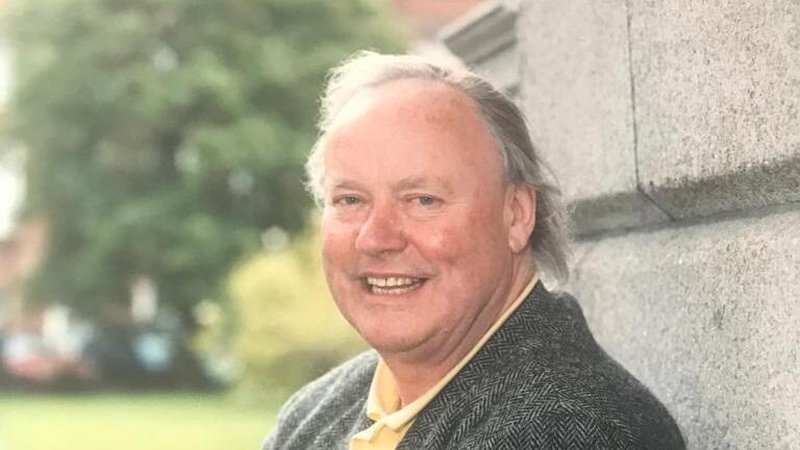
The Irish poet Brendan Kennelly died on 17 October, aged eighty-five. At an event for his eightieth birthday, Kennelly had said, he wanted to be remembered by his poems. His poem “Oliver to his Brother” is one that stays with me.
The name Oliver still suggests Oliver Cromwell in Ireland, so deep are the scars left in the national consciousness by Cromwell’s holocaust in Ireland: massacres of thousands of soldiers and civilians by the New Model Army at both Drogheda and Wexford in 1649, the execution of large numbers of Catholic clergy, the transportation of thousands of women and children to Barbados, to work on sugar plantations.
So, poem’s title, “Oliver to his Brother”, is loaded. In addition, the title announces that the poem’s speaker is Cromwell himself, and to expect a private address.
Loving brother, I am glad to hear of your welfare
And that our children have so much leisure
They can travel far to eat cherries.
This is most excusable in my daughter
Who loves this fruit and whom I bless.
Tell her I expect she writes often to me
And that she be kept in some exercise.
Cherries and exercise go well together.
I have delivered my son up to you.
I hope you counsel him; he will need it;
I choose to believe he believes what you say.
I send my affection to all your family.
Let sons and Daughters be serious; the age requires it.
I have things to do, all in my own way.
For example, I take not kindly to rebels.
The text is a letter. Its first word, ‘Loving’, is deeply ironic. The irony continues in ‘glad’ and ‘your welfare’. The second line reveals that this letter is a response to one telling him of his children, at least two of whom seem to be living with their uncle. It is also suggested that they enjoy freedom: ‘cherries’ evoke summertime, also ‘travel far’ suggests the outdoors and independence. This clashes implicitly with the harsh discipline of an army in the context of the military man Cromwell.
The first sentence, spanning three lines, ends in ‘cherries’. The reference to cherries introduces smell, taste and colour – sensations that have been absent so far, and immediately intensify the sensual appeal of the image and make it more memorable. Until this word, the poem has been reflective, cerebral, with slight hints at outdoor pleasure.
A loving father, Cromwell finds such delight ‘excusable’ in his daughter – implying he is less happy about his son enjoying the innocent pleasures of life. He adds, referring to his daughter, ‘whom I bless’, requests and looks forward to correspondence from her. He is concerned for her wellbeing and suggests to his brother that he ought keep an eye on the child exercising: ‘Cherries and exercise go well together’.
Next, his thoughts turn to his son, also in his brother’s care. For him, Cromwell asks for a more serious upbringing: his brother should council him, ‘he will need it’. A much more serious life is expected for his son. Cromwell as a leader in the English revolution, a signatory to Charles’ I arrest and subsequent beheading, in the first bourgeois revolution in history, expects his son to be prepared to enter a life of politics and militarism. Kennelly then reinforces the irony in the line sending ‘affection’ to brother’s family, highlighting the sense of Cromwell the family man.
This is followed by a transitional line ‘Let sons and Daughters be serious; the age requires it.’ And now the age comes more clearly into focus. It is a brutal age, showing at this early stage of capitalist history, now that the bourgeoisie has seized power, it will exercise great force to supress any challenge to its power. Be this in Britain or in Ireland.
This thought links the poem’s first half with its latter half: ‘I have things to do, all in my own way’. And then Cromwell, who was a supreme rebel in English history (decapitating king and establishing a parliamentary republic) states: ‘I take not kindly to rebels.’
Cromwell continues the English tradition of colonialism – does not bring to Ireland the emancipation of England, and is responsible for genocide.
This ominous, threatening statement comes at line 14 of 28, in the exact middle of the poem.
Now the attention turns away from the family to ‘I’, Oliver Cromwell, military man. As the poem’s speaker, Cromwell relates an actual historical event in which he was instrumentally involved:
Today, in Burford Churchyard, Cornet Thompson
Was led to the place of execution.
He asked for prayers, got them, died well.
After him, a Corporal, brought to the same place
Set his back against the wall and died.
A third choose to look death in the face,
Stood straight, showed no fear, chilled into his pride.
‘Today’ dates and places the letter: The Banbury mutiny was a mutiny in England by soldiers in the New Model Army. The mutineers sympathised with the radical Levellers and early communist Diggers in England, who wanted an equal society for all and set up communes. This execution demonstrated that Cromwell suppressed aspirations to take further the ideas of the revolution, apply them to all. The three leaders shot were Cornet James Thompson (commanding Captain William Thompson’s brother), Corporal Perkins and John Church on 17 May 1649. This destroyed the Levellers’ power base in the New Model Army. Cromwell reports coldly how they died. This is before Cromwell goes to Ireland in August.
Men die their different ways
And girls eat cherries
In the Christblessed fields of England.
Some weep. Some have cause. Let weep who will.
Whole floods of brine are at their beck and call.
I have work to do in Ireland.
‘Men die’, and ‘girls eat cherries’ brings the reader back for a moment to the poem’s opening lines. Cherries now are brought into clear association with blood – cherries are blood-red. Cherry eating is no longer as innocent as it seemed in the beginning. The cherries placed at the start prove to hint at an underlying blood trail.
As a Puritan, Cromwell saw things in religious terms and justifies his actions accordingly: ‘Christblessed fields of England’. Yet, he shows no compassion: ‘Some weep. Some have cause. Let weep who will.’ The weeping drenches the next two lines, by its repetition and the alliteration with ‘will’, the EEEE sound echoes the weeping. The three short sentences in one line enact strictest control, but also hint at short breath and sobbing. This contrasts with the free flow of the next line, where floods of tears are suggested in the salty ‘brine’, reinforced at sound level with the alliteration ‘beck’. Cromwell’s cynicism is implied in ‘Let weep who will’ and his comment about the weeping having tears “at their beck and call”.
The final line announces Cromwell’s campaign in Ireland. It comes as a profound shock to the reader. We know him now. We know what will happen. This is has only been a prelude of what he will do in Ireland.
With this poem Brendan Kennelly creates a powerful image of Cromwell. Its relevance for today lies in the stark reminder of early capitalist suppression of aspirations for emancipation, with murder and genocide. Cromwell’s methods continue to this day.
The power of Kennelly’s verse makes the poem very memorable. At his 80th birthday event Kennelly also said he hoped that his poems would be read out aloud. “Oliver to his Brother” would be most suitable.